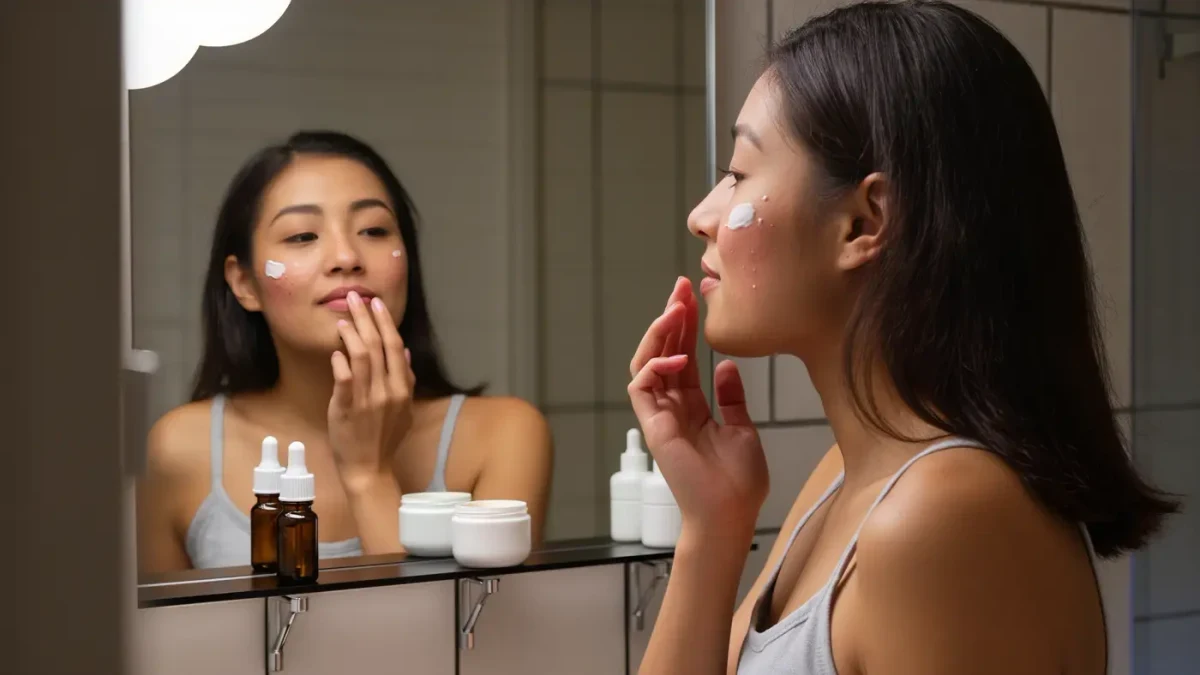
Most retinol burn can be prevented before it starts: begin with a low concentration of 0.25 to 0.3 percent, apply it to fully dry skin only two or three nights a week, and follow each dose with a plain moisturizer — the technique dermatologists call buffering or the sandwich method. Redness, flaking, and tightness are not a sign the treatment is working; they are a signal that the dose or frequency outran what your barrier could handle. Vitamin A derivatives like retinol work by speeding up cell turnover, according to National Institutes of Health fact sheets, and that same turnover is what makes unaccustomed skin sting.
This article publishes information, not medical advice. Persistent burning, swelling, or blistering warrants a visit to a board-certified dermatologist rather than a longer wait-and-see period at home.
What does retinol burn actually look and feel like?
Retinol burn typically shows up as redness, dryness, peeling, and a tight or stinging sensation within one to three days of application. In a clinical trial framework this reaction is called retinoid dermatitis, and study authors quantify it on irritation scales rather than dismissing it as purging. The distinction matters: purging is a temporary uptick in blemishes, while burn is barrier disruption. Peeling that arrives with burning, not with breakouts, points to irritation.
Mild irritation versus a true burn
Slight tightness for an evening after a new active is common and usually settles on its own. A true retinoid burn involves visible redness that lasts days, small cracks in the skin, swelling, or pain when you apply anything at all. In published tretinoin studies — tretinoin is prescription-strength vitamin A — irritation scores peaked most often in the first two to four weeks, which is why dermatologists front-load prevention during that window rather than reacting after the fact.
How do you prevent retinol burn from the very first application?
Prevention rests on three levers you control: concentration, frequency, and placement in the routine. Starting below 0.3 percent retinol, limiting use to two or three nights weekly, and applying moisturizer before and after — the sandwich method — keeps the delivered dose low while your skin builds tolerance. Dermatologists interviewed in consumer health coverage over the past several years repeat this sequence almost universally, and the logic traces back to how retinoids bind receptors in the skin.
- Start with a pea-sized amount for the entire face, not per zone.
- Wait 20 to 30 minutes after cleansing, because damp skin absorbs more and irritates faster.
- Apply a layer of basic moisturizer, then the retinol, then moisturizer again.
- Skip acids, scrubs, and benzoyl peroxide on retinol nights.
- Wear SPF every morning; National Cancer Institute consumer materials note that retinoid-treated skin is more sun-sensitive.
What is the moisturizer sandwich method, step by step?
The sandwich method places retinol between two layers of moisturizer so fewer molecules reach the skin at once, which blunts the initial sting without canceling long-term results. It is the single most recommended tolerance-building technique in dermatologist interviews, and it costs nothing extra — an occlusive-leaning cream and five extra minutes. Here is the sequence practitioners describe.
- Cleanse with a gentle, non-stripping face wash and pat dry completely.
- Wait until the skin feels dry to the touch — roughly 20 minutes if you tend to be patient, longer if your skin runs sensitive.
- Apply a thin layer of fragrance-free moisturizer and let it settle for a minute.
- Dot a pea-sized amount of retinol across your forehead, cheeks, and chin, then blend.
- Seal with a second layer of moisturizer, and wash your hands.
As tolerance builds over four to eight weeks, most dermatologists suggest keeping the sandwich but adding nights rather than removing moisturizer. The method never stops being useful.
Related stories: Why Your Moisturizer Stings — and When to Stop Using It · How to Build a Minimalist Skincare Routine You Will Actually Keep.
How fast should you increase retinol strength and frequency?
A workable escalation schedule spans roughly 12 weeks: two nights weekly for weeks one and two, every other night for weeks three through six, then nightly if your skin stays comfortable and the product strength remains at or under 0.3 percent. Only after 8 to 12 weeks of consistent use do dermatologists typically endorse moving up a concentration step. Table form makes the checkpoints easier to track.
| Phase | Weeks | Frequency | Strength |
|---|---|---|---|
| Introduction | 1–2 | 2 nights per week | 0.25–0.3% retinol |
| Building | 3–6 | Every other night | 0.25–0.3% retinol |
| Consolidation | 7–12 | Nightly, if comfortable | 0.3% retinol |
| Escalation | after 12 | Nightly | 0.5–1% retinol, optional |
The escalation step is genuinely optional. Many people get the results they want from 0.3 percent and never need more, an outcome researchers have noted when comparing lower-strength retinols with prescription tretinoin in published trials.
Can you combine retinol with other actives without irritation?
You can, but the pairing rules matter more with retinol than with any other active. Safe companions are hydrators and barrier ingredients: hyaluronic acid, glycerin, ceramides, niacinamide, and panthenol all coexist comfortably. Risky same-night partners are glycolic and salicylic acids, benzoyl peroxide, vitamin C at low pH, and physical exfoliants. Vitamin C shifts to mornings, acids to the nights retinol stays in the drawer.
Which ingredients help calm skin that is already irritated?
If stinging starts anyway, pause the retinol entirely and run three to five evenings of moisturizer plus a barrier-supporting ingredient. Ceramide-containing creams, panthenol, and centella-containing products are the standard dermatologist short list for settling a reactive barrier. Reintroduce retinol at half your previous frequency — if you were at every other night, drop to twice a week — and only after the skin feels completely normal for two consecutive days.
The study didn't measure long-term outcomes at every strength; what the irritation scales do show is that frequency, not ambition, predicts who flakes.
Does retinol burn mean the product is working?
No. Visible peeling and burning indicate barrier disruption, not efficacy, and dermatologists consistently reject the no-pain-no-gain framing for retinoids. Clinical trials measure results at tolerated doses, and lower concentrations of retinol have demonstrated measurable improvements in fine lines and pigmentation in published studies without producing the severe irritation seen at higher doses. If your face is flaking every morning, the correct response is to cut frequency, not push through.
When should you stop using retinol and see a dermatologist?
Stop and book an appointment if burning is severe, if swelling or blistering appears, if redness spreads beyond where you applied the product, or if discomfort persists more than a week after you quit. Those signs suggest contact dermatitis or an allergic reaction to a formulation ingredient rather than ordinary retinoid adjustment, and distinguishing between the two is a clinical task. Anyone pregnant or trying to conceive should discuss vitamin A derivatives with a physician before starting any retinoid, per National Institutes of Health guidance on topical vitamin A.
Who should start even slower than the standard schedule?
People with rosacea, eczema, or generally reactive skin benefit from halving the standard schedule: once weekly for the first month, with the sandwich method from night one. Older skin and very dry skin tolerate retinol well but often need richer moisturizers in the sandwich layers. The schedule is a starting template, not a race — the published irritation data reward patience over speed.