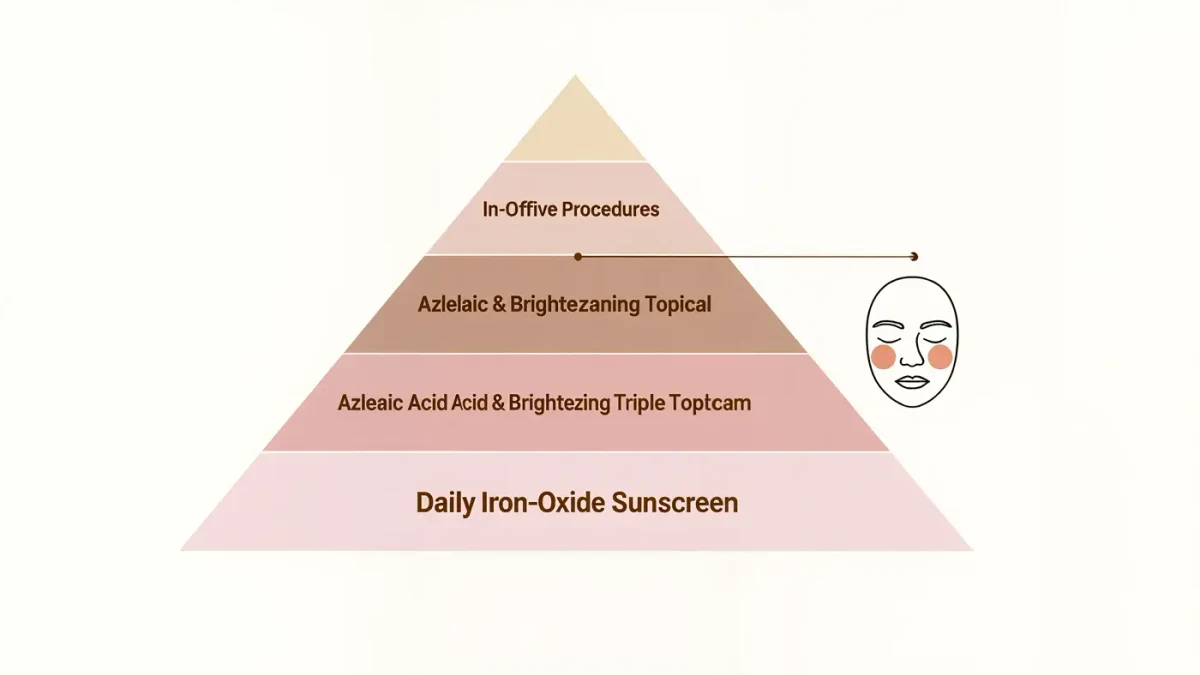
Melasma is managed, not cured: the consensus dermatology approach combines strict daily broad-spectrum sunscreen — with iron oxides against visible light — plus pigment-blocking topicals such as azelaic acid, prescription triple-combination cream (fluocinolone, hydroquinone, tretinoin), and in-office procedures for resistant cases, because melasma is a chronic condition driven by hormones and light rather than a one-time blemish. Dermatology phototesting reviews report that visible light alone can trigger the pigmentation in melasma-prone skin, which is why ordinary UV-only sunscreens underperform and tinted mineral formulas with iron oxides have become a dermatologist staple. No treatment removes the tendency; the goal is control and relapse prevention.
This article publishes information, not medical advice. Melasma is a diagnosis with lookalikes, and prescription options like hydroquinone carry real usage rules — evaluation by a board-certified dermatologist comes before any of the stronger tools discussed here.
What exactly is melasma?
Melasma is acquired hyperpigmentation producing symmetric brown or gray-brown patches, most often on the cheeks, forehead, upper lip, and jawline. It appears overwhelmingly in people with medium to deeper skin tones, in women — dermatology estimates run 90 percent of cases female — and in two common contexts: pregnancy and combined oral contraceptive use, which is why the hormonal nickname "the mask of pregnancy" persists. Sunlight exposure deepens it; UV and visible light both act, per phototesting studies, by ramping up the pigment-producing melanocytes rather than creating new ones.
Why melasma is not "just dark spots"
Ordinary sun spots are collections of pigment in a few overactive cells; melasma involves a broadly provoked population of melanocytes with a vascular and hormonal component, which is why single-ingredient approaches disappoint. Histology shows pigment deposited both in the epidermis and, in many patients, below in the dermis — dermal pigment responds slower and incompletely to topicals. This biology explains the chronic relapsing course that every treatment plan must assume.
Why is daily sunscreen the foundation of melasma treatment?
Because every other treatment is undone by the next unprotected sun exposure: phototesting research showed melasma lesions darken with light doses that barely redden surrounding skin, and trials of bleaching regimens fail without photoprotection as the control condition. The dermatology consensus is broad-spectrum SPF 50 or higher, reapplied during daytime exposure, with iron oxides specifically — present in most tinted mineral sunscreens — because they block high-energy visible light that clear chemical filters pass through.
- Broad-spectrum SPF 50+, every day, including cloudy and winter days.
- Iron-oxide-containing tinted formula, which blocks visible light that triggers melasma.
- Reapplication at midday and before afternoon sun; wide-brim hats beat any single product.
Which topical ingredients actually fade melasma?
The well-evidenced group all share one mechanism family: blocking tyrosinase, the enzyme melanocytes need to make melanin. Azelaic acid at 15 to 20 percent has randomized-trial evidence comparable to hydroquinone 4 percent in some studies; prescription triple cream — fluocinolone, hydroquinone 4 percent, tretinoin 0.05 percent — is the strongest medicinal combination and showed clearance or marked improvement in the majority of patients in its pivotal 8-week trials; kojic acid, cysteamine, tranexamic acid topicals, and vitamin C hold supporting roles with thinner but real data.
| Option | Strength of evidence | Access | Key caution |
|---|---|---|---|
| Sunscreen with iron oxides | Foundational, trial-backed | Over the counter | Must be daily, not occasional |
| Azelaic acid 15–20% | Randomized trials | OTC 10%; higher by prescription in many countries | Slow: 3–6 months |
| Triple combination cream | Pivotal 8-week trials | Prescription | Not for long-term continuous use |
| Tranexamic acid (oral/topical) | Growing trial base | Prescription | Contraindications to check |
Related stories: How to Build a Minimalist Skincare Routine You Will Actually Keep · Urea Cream for Very Dry Skin: How It Works and What Strength to Pick.
How is hydroquinone used safely?
Hydroquinone 4 percent — the workhorse prescription brightener, usually in the triple cream — runs in cycles: roughly three months on, then a break of similar length, under medical supervision. Continuous unsupervised use is what dermatologists warn against, because prolonged application has been associated with a paradoxical blue-gray pigmentation called ochronosis, a risk documented in cases of long-term unsupervised use. Pregnancy and breastfeeding exclude hydroquinone and tretinoin entirely; azelaic acid and strict photoprotection carry the plan instead, per published pregnancy-safety reviews ranking azelaic acid as acceptable.
Do at-home brightening serums work on melasma?
Modestly, and slowly. Over-the-counter formulas built on niacinamide, kojic acid, vitamin C, and alpha arbutin produce measurable but partial lightening over three to six months, and their trial data come from milder pigmentation than deep dermal melasma. They are reasonable maintenance tools after a prescription course, or first-line for pregnancy where prescriptions are off the table — with sunscreen doing the majority of the actual work in every scenario.
Every pigment treatment ends where it began: the sunscreen you wore, or did not, on an ordinary Tuesday.
Do chemical peels and laser help melasma?
They can, as adjuncts and with caution. Superficial peels — glycolic acid series, for example — add modest clearing on top of topicals in published comparisons, while laser and light devices show mixed results: some improvement in selected patients, documented flare-ups in others, particularly with aggressive settings and deeper skin tones. Procedural melasma treatment is an art-of-selection problem, which is why dermatologists stage it after topical control fails rather than first, and why no ethical provider promises clearance from a single device series.
Can melasma go away on its own?
Pregnancy-related melasma sometimes fades substantially after delivery as hormone levels fall, and sun-triggered patches lighten in winter — but the melanocytes retain their reactivity, so the tendency persists. Published follow-up data on treated patients show relapse rates exceeding half within months of stopping treatment, which is why maintenance — daily iron-oxide sunscreen and periodic brightening topicals — is the realistic permanent plan. The condition is managed like asthma rather than cured like an infection: quiet when controlled, provoked when neglected.
When should you see a dermatologist about dark patches?
See a dermatologist before treating whenever patches are new, asymmetric, single, or changing — melasma is common, but melanoma and other conditions must be excluded first, and that exclusion is clinical. A dermatologist also stages the prescription ladder: azelaic acid and triple cream have specific usage windows, tranexamic acid requires contraindication screening, and procedures demand experience. Self-treating an undiagnosed dark patch is the one genuinely wrong answer in pigmentation care.