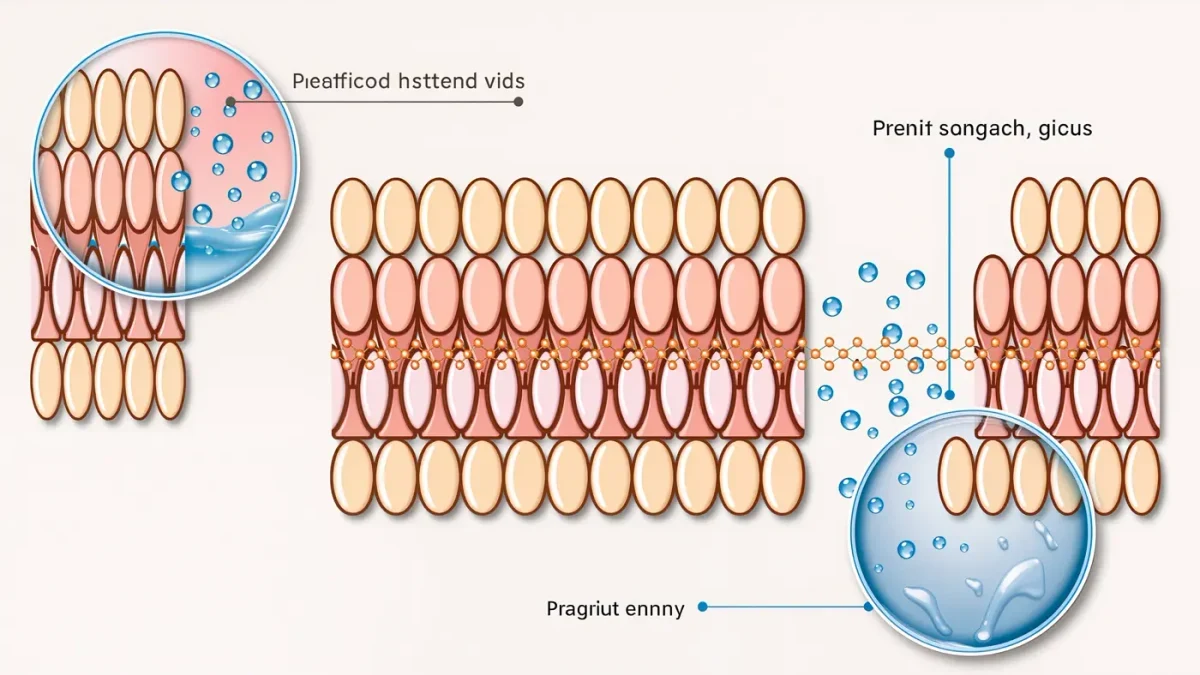
Ceramides are waxy lipid molecules that make up roughly half of the skin barrier's outer layer by weight, where they pack tightly between corneocyte cells and hold water in. In practical terms: if your skin is tight, flaky, or stinging at products it used to tolerate, a ceramide-containing moisturizer is the ingredient category dermatologists point to first. In atopic dermatitis research, affected skin has been shown to contain measurably lower ceramide levels than healthy skin, which is why the ingredient appears in so many barrier-repair formulations.
This article publishes information, not medical advice. Diagnosed skin conditions like eczema or psoriasis call for a board-certified dermatologist, not a self-prescribed routine, however well-formulated the moisturizer.
What exactly are ceramides?
Ceramides are a family of sphingolipids — fat molecules built from a sphingoid base linked to a fatty acid — and they are one of three key lipid classes in the stratum corneum, alongside cholesterol and free fatty acids. Researchers have identified more than a dozen distinct ceramide species in human skin, conventionally labeled with codes like ceramide NP, AP, and EOP. Each subspecies packs slightly differently, which is why multi-ceramide formulas exist rather than single-molecule products.
The brick-and-mortar picture
Dermatology textbooks describe the barrier as a brick-and-mortar structure: the corneocytes are bricks, and the lipid matrix — roughly 50 percent ceramides by mass, per widely cited stratum corneum composition studies — is the mortar. Damage the mortar and the wall leaks. That leak shows up on instruments as transepidermal water loss, or TEWL, the standard research measurement for how much moisture escapes through the barrier.
What do ceramides actually do for the skin barrier?
Ceramides perform three measurable jobs: they slow water loss through the outer layer, they block entry for irritants and allergens, and they support the skin's slightly acidic protective surface. When ceramide levels drop — through over-cleansing, harsh actives, cold weather, age, or an inflammatory condition — water loss rises and sensitivity follows. Clinical work in atopic dermatitis patients documented this deficit decades ago, and it remains the core evidence behind the ingredient's reputation.
- Barrier sealing: the lipid lamellae between cells are the physical waterproofing.
- Irritant defense: a dense lipid matrix keeps surfactants and pollen proteins out.
- Signaling: certain ceramide metabolites participate in the skin's natural renewal cycle, according to dermatological reviews.
How do you know if your skin is low on ceramides?
The reliable indicators are functional, not visual alone: skin that feels tight within minutes of washing, drinks moisturizer and still flakes, stings at products that previously caused no reaction, or looks dull with fine crepey texture. A single rough winter can produce all of these, and so can a week of retinol used too enthusiastically. None of these signs is specific to ceramide deficiency — which is exactly why the ingredient is a sensible first response regardless of the underlying cause.
| Sign | Typical trigger | First response |
|---|---|---|
| Tightness after cleansing | Harsh surfactant cleansers | Gentle cleanser plus ceramide cream |
| Stinging at familiar products | Overuse of acids or retinoids | Pause actives, ceramide moisturizer nightly |
| Flaking and dullness | Cold, dry winter air | Thicker ceramide cream, humidifier |
| Recurring eczema flares | Atopic dermatitis | Dermatologist-prescribed treatment first |
Related stories: Vitamin C Serum: When and How to Apply It for Real Results · Urea Cream for Very Dry Skin: How It Works and What Strength to Pick.
Do ceramide creams actually work when applied to the skin?
Yes, with a qualification about formulation. Ceramides sit in the outermost layer of skin, so topically applied lipids physically replenish the matrix rather than needing to penetrate deeply — which is why they work where many big-molecule ingredients fail. The qualification: ceramides work best in ratios. The patented trio used in published research combines ceramides with cholesterol and fatty acids in an approximately 3:1:1 to 1:1:1 ratio, and studies comparing balanced mixtures against single ingredients found the mixtures repaired damaged barriers faster. A formula listing one ceramide at the end of the ingredient list after 40 other entries is doing less than one that names multiple ceramides among the first 15 ingredients.
What about skin making its own ceramides?
Skin synthesizes ceramides continuously, and synthesis rises with age into the twenties before declining. Topical application does not shut down that production in any study this site reviewed; the concern that supplementing creates dependency is not supported by published barrier-repair research. What does suppress natural synthesis is chronic inflammation and barrier injury — one more argument for repairing promptly rather than waiting skin out.
Which ceramide types should you look for on a label?
The INCI names to scan for begin with "Ceramide" followed by a two- or three-letter code: NP, AP, EOP, NG, and EOS are the most common in commercial formulas. Ceramide NP is the most widely studied in topical products, while ceramide EOP and AP appear in the ratio-based patented blends. Synthetic and plant-derived ceramides are chemically identical to skin-identical ones at the molecular level, so "plant-based" on the label describes sourcing, not efficacy.
- Ceramide NP — the workhorse, present in most studied formulas.
- Ceramide AP — often paired with NP for lamellar structure.
- Ceramide EOP — the long-chain type in patented barrier-repair ratios.
- Phytosphingosine — a ceramide precursor that skin can convert.
How should you layer ceramide products in a routine?
Ceramide moisturizers go on after water-based serums and before occlusive balms, oils, or SPF. The full sequence for a compromised barrier looks like this: gentle cleanser, hydrating serum on slightly damp skin, ceramide moisturizer, and — at night only — a thin occlusive layer if the skin is badly flaking. In the morning, SPF comes last. Acids and retinoids stay out of the routine until tightness and stinging resolve completely, typically one to two weeks.
Can you combine ceramides with actives like retinol or acids?
You can, and pairing them is one of the standard tolerance strategies dermatologists recommend: applying a ceramide moisturizer before or after a retinoid buffers irritation without blocking results. Ceramides are inert lipids, so they do not neutralize acids the way mixing does nothing harmful chemically. The one scheduling note is layering order — the retinoid or acid contacts the skin first if you apply the cream afterward, which is the gentler arrangement.
Ceramides will not treat what they cannot reach: infection, allergy, and autoimmune conditions all present as "dry skin" and all need a clinician.
Do you need a ceramide supplement?
No credible dermatological source recommends ceramide supplements over topical care for a damaged skin barrier. An oral wheat-derived ceramide supplement has been studied in Japan for skin hydration, with modest findings in small trials, but the evidence base is thin compared with decades of topical barrier research. Diet supplies the building blocks anyway — the same fatty acids found in olive oil and fish figure in ceramide synthesis.
How long until a ceramide cream shows results?
Comfort usually improves within three to seven days of consistent use, because restoring the lipid matrix is fast once the source of damage stops. Measured barrier recovery — normalization of TEWL — takes roughly one to two weeks in experimental barrier-disruption studies. Visible texture change follows the skin's own renewal cycle, so judge a product after a month, not after three nights.