A beauty subscription box is worth the fee only when the products inside would cost more at retail than you paid, and only when you would actually use them. That second condition is where most boxes fail. A parcel stuffed with sachets you will never open has zero value, no matter what the brand's valuation card claims.
This beauty subscription box review framework skips the unboxing theatrics and does the arithmetic instead. The method is simple: list every item, find its full retail price and its real sample size, divide, and compare the usable total against the monthly fee. The box that wins is rarely the one with the most items. It is the one whose items you would have bought anyway.
What is a subscription, in plain terms?
A subscription is an arrangement for receiving something of a continuing or periodic nature on a prepayment plan, according to Merriam-Webster's definition. In beauty, that usually means a monthly parcel of sample-size or full-size products for a recurring fee, billed automatically to your card.
That automatic renewal is the model's engine and its trap. Wikipedia's entry on the subscription business model notes that because of consumer inertia, subscribers may keep paying for services they no longer value simply because they do not realize they are still subscribed. Beauty boxes lean on that inertia. The unboxing arrives before the memory of cancelling does.
So the first rule of the math: value a box by what arrives, not by what the marketing promises might arrive. Curated boxes rotate their contents, and a month of duds costs the same as a month of hits.
How do you calculate what a box is actually worth?
Work through four steps, every month, in writing.
- List every item with its full-size retail price. Use the price the brand charges for the full product, not a made-up "sample value."
- Estimate the usable fraction of each sample. A deluxe mini you will finish is worth close to its full mini price. A single-use sachet of serum is worth one or two applications, which is a small fraction of the bottle.
- Subtract anything you will not use. A shade you would never wear, a fragrance family you avoid, a formula your skin rejects. Zero value, honestly applied.
- Divide the honest total by the fee. Anything near or below 1 means the box lost. Anything above roughly 2 means it beat retail, if the products were things you wanted.
That last clause is the whole game. Getting 2.5 times your money back on products you would never buy is worse than getting 1.2 times your money back on your own usual cleanser and moisturizer. Value is personal before it is numerical.
What should you compare the fee against?
Anchor the fee against other subscriptions you already understand. Amazon lists its Prime membership at $14.99 per month, per Amazon's own Prime page, and bundles delivery, streaming, and other services into that price. A beauty box charging a similar figure needs to deliver a similar spread of genuinely useful things to compete, and most months it does not.
It also helps to compare a box to buying outright. Wikipedia's account of the convenience model describes the appeal plainly: the customer does not have to remember to find and buy the product periodically. That convenience has real worth if you enjoy discovery and would otherwise skip trying new things. It has no worth if you already have a routine that works. Our analysis: the fee buys convenience and surprise, and the products have to justify it on top, not instead.
Which products in a box carry the most value?
Not all categories convert to value equally. Skincare samples tend to be the weakest proposition, because actives work over weeks and a two-week sachet of retinoid tells you little. If you want to judge a retinoid properly, read the strength comparison first — our retinol vs. retinal vs. retinyl palmitate breakdown explains why concentration and form matter more than packaging. For related coverage, see Retinol vs. Retinal vs. Retinyl Palmitate: Strength, Compared.
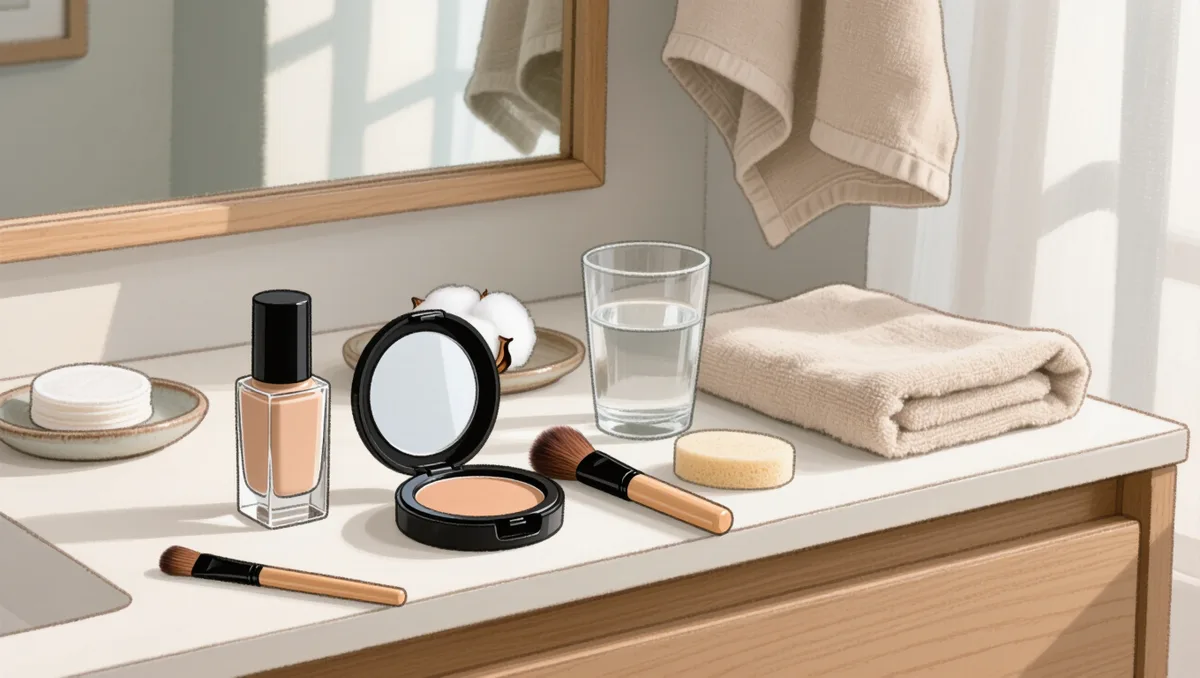
Makeup, by contrast, is where boxes can genuinely pay. A lipstick mini, a cream blush, or a single eyeshadow in a usable shade is a complete product at small size. You can finish it, judge it, and rebuy the full size if it earns the space. Our makeup coverage follows the same logic: small formats are legitimate formats, not consolation prizes.
Hair and body items sit in the middle. Shampoo sachets are nearly worthless; a full-size hand cream is real value. Fragrance is a special case — a vial is exactly the right size for deciding whether you like a scent, which makes perfume samples among the few sachets with honest value.
| Item type | Typical value in a box | Why |
|---|---|---|
| Full-size product | Highest | Retail-equivalent, finishable, rebuyable |
| Deluxe mini you will finish | High | Near full utility at partial cost |
| Fragrance vial | Moderate | Right size for a real decision |
| Makeup mini in a wearable shade | Moderate to high | Complete product, small format |
| Single-use skincare sachet | Low | Too short to judge, too small to matter |
| Item in a shade or scent you avoid | Zero | You will not open it |
How do you rank boxes against each other fairly?
Rank on three axes, in this order: usable value ratio, hit rate, and exit friction.
- Usable value ratio. The honest retail total from the method above, divided by the fee, averaged over at least three months. One good month proves nothing; curation varies.
- Hit rate. The share of items you actually finished or rebought. A box with a lower value ratio but a higher hit rate is the better subscription, because hit rate predicts future months.
- Exit friction. How hard the cancellation is. Wikipedia's subscription model overview describes automatic renewal charged to a pre-authorized card as standard practice, which means the burden of stopping falls entirely on you. Check the cancellation path before you subscribe, not after.
Where you bought the box matters for exit friction too. As a general pattern across subscription services, purchases made through an app store or a third-party retailer are managed by that provider rather than the brand itself — Microsoft's own support documentation makes this explicit for its subscriptions, noting that the original seller handles cancellation and billing changes. The same caution applies here: know who holds your billing before your card is charged again.
What this means in practice: the best box is the one with the highest hit rate at a fee you would pay knowingly, with a cancellation you can execute in under two minutes. Everything else is packaging.
When should you cancel a beauty box?
Cancel when two consecutive months produce a usable value ratio near or below 1, or when your unopened pile grows faster than your finished pile. Neither signal requires a bad month to trigger; both require only honest counting. Subscription inertia is the model's design, per Wikipedia's analysis, and the counter to inertia is a calendar reminder on the day before renewal, every month, until you decide on purpose.
There is no shame in pausing. The products will still exist next season, and most boxes will still be running the same discovery pitch. What the evidence on subscription models establishes is that the recurring charge continues whether or not the value does. What remains unknown, month to month, is the contents — which is exactly why the math, not the marketing, should decide whether you stay. This connects to our earlier piece, Mineral vs. Chemical Sunscreen: Which One Should You Actually Buy?.