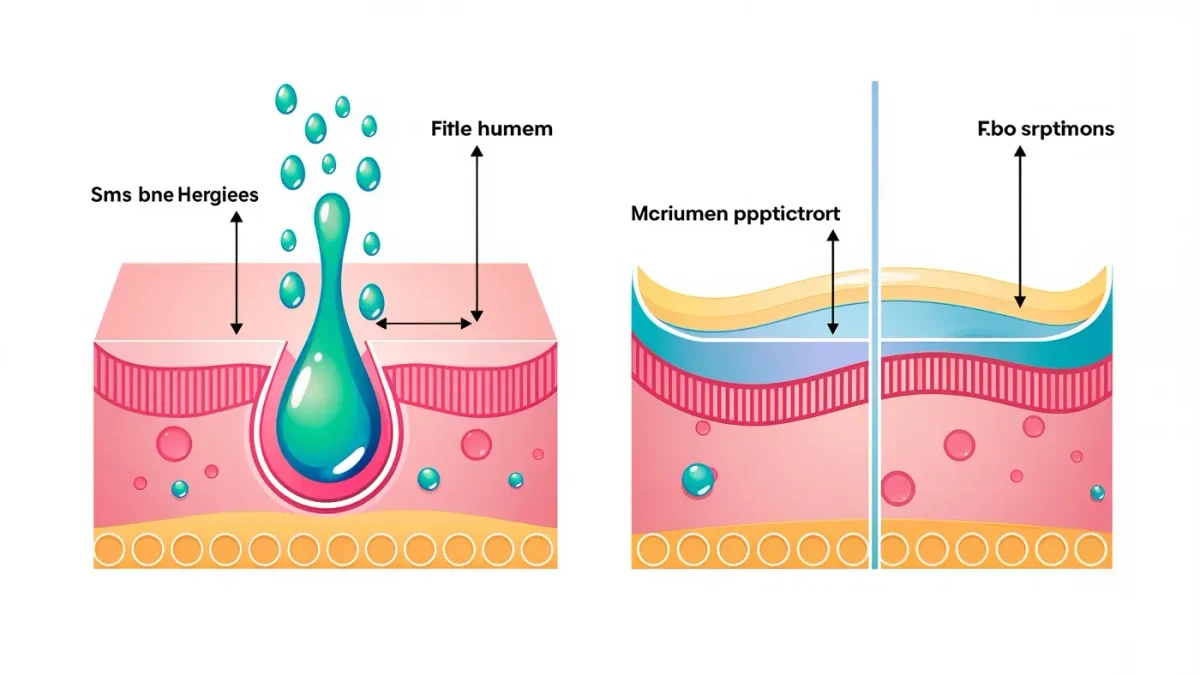
Squalane and hyaluronic acid solve two different problems, so the right pick depends on which one your skin has. Hyaluronic acid, a sugar molecule naturally present in skin, is a humectant that binds water — published biochemistry literature credits it with holding roughly a thousand times its weight in water. Squalane is an emollient: a lightweight oil version of squalene, a lipid human sebum already produces, that softens skin and slows water loss. Dry-feeling skin usually wants the second; dehydrated but oily skin usually wants the first.
Beauty Ring publishes information, not medical advice. The comparison below draws on the brands' ingredient listings, published dermatology research, and named clinical sources. Persistent dryness, flaking, or irritation that does not respond to over-the-counter moisturizers is a question for a dermatologist, because several medical conditions mimic simple dehydration.
Is squalane even a humectant?
Strictly, no — and that mislabel drives a lot of confusing marketing. Per published lipid biochemistry, squalane is an emollient and occlusive-adjacent ingredient: it fills gaps between skin cells and reduces transepidermal water loss, but it does not attract water the way humectants do. Hyaluronic acid is the true humectant of the pair. The comparison matters because the two ingredients work as a system: humectants pull water toward the skin surface, and emollients hold it there. Used alone in dry air, a humectant can theoretically draw water out of deeper skin layers, which published dermatology reviews list as a reason to pair hyaluronic acid with a moisturizer that seals.
What does the ingredient list tell you to look for?
On an INCI list, hyaluronic acid may appear as sodium hyaluronate, its salt form and the version most brands use because it is cheaper and more stable in solution. Brands' listings also increasingly show hydrolyzed hyaluronic acid, a lower-molecular-weight fragment. Per published research on molecular weight, smaller fragments can penetrate deeper into the stratum corneum, while the full-size molecule sits closer to the surface — so a product stacking several weights is a reasonable sign of deliberate formulation rather than label decoration. Squalane appears on lists as squalane, and its source is usually marketing copy rather than INCI: olive-derived, sugarcane-fermented, or historically shark-derived, which matters to readers with sourcing concerns even though the finished molecule is chemically identical.
Which one fits oily or acne-prone skin?
Hyaluronic acid fits oily skin more comfortably, because it adds water without oil. Dermatologists note that many people with oily skin are dehydrated rather than dry, and stripping cleansers make the surface feel worse, not better. Squalane is the rare oil that suits acne-prone skin reasonably well — published comedogenicity discussions generally rate it low on the clog scale since it mimics a lipid skin already makes — but any oil layer on very oily skin can feel heavy. A reasonable test, per brands' own usage guidance, is a few drops of squalane at night alone; if morning skin feels congested, stay with a gel-type hyaluronic serum.
Related stories: Benzoyl Peroxide vs. Salicylic Acid: Which Fights Breakouts Better? · Sheet Masks vs. Overnight Masks: What the Formulas Actually Deliver.
Can you use both together?
Yes, and the sequence is the point. Apply the hyaluronic acid serum to damp skin — humectants need water to bind — then follow with a moisturizer or a few drops of squalane to lock it in. Per published dermatology reviews, that pull-then-seal structure is the logic behind nearly every well-built moisturizing routine, whether the seal is squalane, a ceramide cream, or a plain petrolatum-based balm. In humid climates the seal can be lighter; in winter heating season it usually cannot, because low ambient humidity is exactly the condition under which an unsealed humectant works against the skin.
How do the price points compare?
Both ingredient classes are inexpensive at the raw-material level, and the price gap between products reflects packaging, texture systems, and brand positioning more than the hero ingredient. Squalane serums are typically single-ingredient oils in glass dropper bottles, which makes comparison shopping unusually honest: the main variables are sourcing claims and filtration. Hyaluronic products vary more, because the ingredient rarely stands alone — most formulas add panthenol, glycerin, or botanical extracts that change the feel and can add irritation risk for reactive skin.
| Factor | Squalane | Hyaluronic acid |
|---|---|---|
| Ingredient class | Emollient lipid | Humectant sugar molecule |
| What it does | Softens, reduces water loss | Binds water, plumps surface |
| Best fit | Dry, flaking, barrier-compromised skin | Dehydrated, oily, or combination skin |
| Label names | Squalane | Hyaluronic acid, sodium hyaluronate, hydrolyzed HA |
| Application rule | After water-based layers | On damp skin, then sealed |
| Clog potential | Generally rated low | None documented; watery formulas may dry tight |
| Common pairing | Under ceramide cream at night | Under squalane or any moisturizer |
Do either of them have side effects?
Rarely, and almost never from the hero molecule itself. Published dermatology literature treats both squalane and hyaluronic acid as well-tolerated across skin types, and neither is a documented photosensitizer. Reactions trace to the supporting cast: fragrance, essential-oil extracts, or preservatives elsewhere on the label. One quirk is worth knowing — on bare, dry skin in very low humidity, a hyaluronic serum can leave a tight, papery feeling as the water it holds evaporates, which dermatologists note is a formula-environment mismatch, not an allergy. Squalane produces a blander complaint: too many drops sit on the surface and transfer onto pillowcases, an issue of dose rather than chemistry.
The verdict most ingredient lists support: this is not either-or. Hyaluronic acid handles the water, squalane keeps it, and the driest skins tend to need the pairing rather than a choice between the bottles.