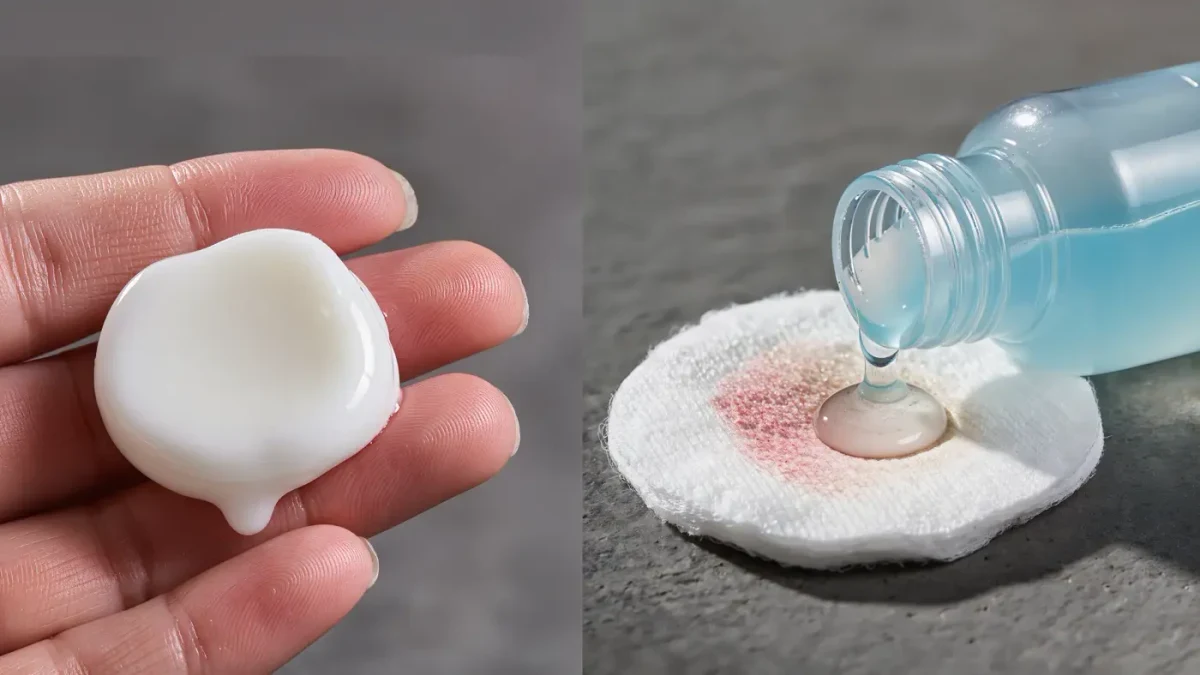
For full-face makeup, waterproof mascara, and stubborn sunscreen, a cleansing balm generally out-removes micellar water, because balms dissolve oil-based pigment the way chemistry says they should — like dissolves like. Micellar water lifts light makeup and dirt using surfactant clusters called micelles, and it does that job well. The honest comparison: a balm handles the heavy end of removal, micellar water handles the light end and the no-sink nights, and many readers' routines legitimately end up using each for its own shift.
Beauty Ring publishes information, not medical advice. Claims below are attributed to brand ingredient listings, published dermatology sources, and formulation chemistry. If removal is followed by persistent stinging, redness, or breakouts along the hairline, a dermatologist can tell you whether the barrier, the surfactant, or something unrelated is responsible.
How does a cleansing balm actually work?
A balm is essentially a solid oil. Its listed base — typically hydrogenated vegetable oil, caprylic/capric triglyceride, or esters — melts on contact with warm skin, and per basic formulation chemistry, oils dissolve the sebum, waxes, and pigment binders that water alone cannot touch. That is why long-wear foundation, film-forming mascaras, and water-resistant sunscreen, which are engineered to survive water and sweat, break down under a balm's massage. Most brands direct you to emulsify: add a little water and the balm turns milky, because emulsifying agents on its label let the dissolved makeup rinse away rather than sit on the skin. Skipping that step is the commonest reason a balm "left residue" — the residue was dissolved makeup that never got rinsed.
What are micelles, and what can they lift?
Micelles are spherical clusters of mild surfactant molecules, each with a water-loving outside and an oil-loving core; per published surfactant chemistry, the cores trap oils and dirt and carry them away when the cotton pad wipes. That design suits light foundation, sweat, sunscreen on a low-exposure day, and morning face refreshes. What published reviews and dermatologists note micelles handle less well is the engineered end of makeup: high-pigment lipsticks, waterproof mascara with film formers, and layered SPF can need several passes or simply leave pigment behind. Dermatologists also point out the friction question — repeated pad-wiping over the lash line can be more irritating to the eye area than a balm massaged in with fingertips.
Does micellar water leave surfactant behind?
It can, and brands' own usage guidance splits on the answer. Some labels explicitly say "no rinse needed"; others recommend following with a cleanser. Published dermatology commentary on leave-on surfactants is cautious: residues in the micellar family are mild, but on reactive skin or around the eyes, any film left overnight is a plausible irritation source, which is why many dermatologists suggest a water rinse after micellar use in the evening. As a morning step or a travel step, the residue question barely arises, because the product replaces a wash rather than preceding one.
Related stories: Silicone vs. Water-Based Primers: A Comparison by Ingredient List · Benzoyl Peroxide vs. Salicylic Acid: Which Fights Breakouts Better?.
Do balms suit oily and acne-prone skin?
More often than their texture suggests. The double-cleanse pattern that dermatology commentary generally supports — oil or balm first, gentle water-based cleanser second — exists precisely so the oil step can dissolve sebum and sunscreen without harsh stripping, and the second step removes the remainder. Published acne guidance puts the emphasis on the actives that treat breakouts rather than on avoiding oil cleansers; a poorly rinsed balm used alone is a likelier congestion suspect than the balm chemistry itself. As with any formula, the full ingredient list matters: isopropyl myristate and isopropyl palmitate, listed on some balm labels, are the two esters dermatology sources most often flag as comedogenic suspects.
Which one fits travel, gym bags, and the shower?
Micellar water wins the logistics comparison by a distance, and the formats explain it. A sealed bottle with a cap cannot leak the way a balm can melt in a warm bag, needs no towel or sink, and works at a festival or on a plane. Balms need fingertips, water, and ideally a muslin cloth, which is a routine rather than a moment. The counterargument is dosing: a balm works in one generous massage, while pads and bottles encourage small, repeated applications that cost more over time per ounce of makeup removed — a practical point, not a chemical one.
| Factor | Cleansing balm | Micellar water |
|---|---|---|
| Removal chemistry | Oil dissolves oil-based makeup and film formers | Micelle cores trap light oils and dirt |
| Best at | Waterproof mascara, long-wear foundation, SPF | Light makeup, sweat, daily grime |
| Rinse needed | Yes — emulsify and rinse | Often optional per brands; rinse advisable at night |
| Friction on skin | Low; fingertip massage | Pad-wiping, repeated passes on stubborn pigment |
| Eye-area comfort | Generally gentle when massaged closed-eye | Can sting if liquid enters the eye |
| Portability | Poor to fair; can melt in heat | Excellent; spill-proof cap, no sink needed |
| Typical routine slot | Step one of an evening double cleanse | Morning refresh, travel, post-gym |
How do the ingredient lists differ beyond the base?
Usefully, and the differences explain most customer complaints. Balm labels cluster around three bases: hydrogenated vegetable oil for a thick spa-like massage, caprylic/capric triglyceride for a lighter feel, and polyethylene or synthetic wax for a balm that scoops firm and melts slow — the wax-heavy versions are the ones most likely to feel filmy if under-rinsed. Micellar water labels are shorter but less neutral: purified water, mild surfactants such as poloxamer or coco-glucoside family members, humectants, and often preservative systems that carry the sting risk around the eyes. Fragrance appears on both sides, and per dermatology commentary it is a likelier irritation source than either base chemistry. Reading past the hero claim to the third and fourth ingredients usually predicts the experience better than the category name on the front.
The verdict the chemistry supports: balms are the tool for engineered, long-wear, water-resistant makeup, and micellar water is the tool for everything light. If your routine ends at waterproof mascara most nights, the balm is the non-negotiable bottle; if your makeup is a tinted SPF and brow gel, micellar water on its own is a defensible finish line.