You need a dedicated eyeshadow primer mainly if your eyelids are oily or your shadows crease and fade within a few hours. Makeup artists' consensus is blunt on this point: on dry or normal lids, a well-powdered base or even bare skin can hold powder shadow acceptably for a workday, while on oily lids nothing else performs — concealer cracks, foundation shifts, and only a silicone-based gripping primer keeps pigment true. So the product is not a scam and not a must: it is a fix for a specific skin behavior.
BEAUTY RING publishes information, not cosmetic or medical advice. If the eyelid skin is irritated, flaking, or recovering from a reaction, sort the skin first and the makeup second, and see a dermatologist for anything that stings or swells. Everything below is technique, drawn from the way working artists explain their prep routines, plus what brands state about their own formulas.
What does an eyeshadow primer actually do?
Three things, and each maps to a failure you have probably seen. First, it controls sebum: eyelid skin is among the oiliest on the face, and oil breaks the bond between powder and skin, which is what causes the crease line that stamps shadow into your fold by mid-afternoon. Second, it evens the canvas — neutralizing redness and vein color so a pale shimmer reads clean instead of dusty. Third, most formulas are tacky, and that tack physically grips pigment particles, which is why shimmers and glitters applied over primer show dramatically less fallout, per makeup artists' standard technique.
The common formulations are silicone-based creams (dimethicone near the top of the ingredient list is the tell, per the brands' own listings), which both smooth texture and block oil. Some tinted versions add a flesh-tone correction; others, like the widely used Urban Decay Primer Potion or NARS Smudge Proof, are essentially invisible films whose entire job is grip and oil control, per the brands' product descriptions.
Can you just use concealer or foundation instead?
You can, with known limits. Concealer works for dry lids and short wear: it evens color and gives powder something to grab. The failure mode is flexibility — face products are formulated to move with expressive, mobile skin, and eyelids fold hundreds of times an hour. Over a few hours the concealer film cracks, and powder settles into the crack as a crease. Artists who substitute concealer always set it thoroughly with translucent powder to delay exactly this.
Foundation is a weaker substitute still: it is the slipperiest option and mostly adds color rather than grip. A pressed powder base is the better zero-cost trick — pressing a thin film of translucent or skin-tone powder over bare skin absorbs oil and gives matte grip. It will not outperform a real primer on oily lids, but on dry lids many artists consider it sufficient.
Related stories: Cream vs Powder Blush: Which Formula Works for Your Skin Type? · Mascara Formulas Compared: Length, Volume, Waterproof — Which Do You Actually Need?.
How long should eyeshadow last with and without primer?
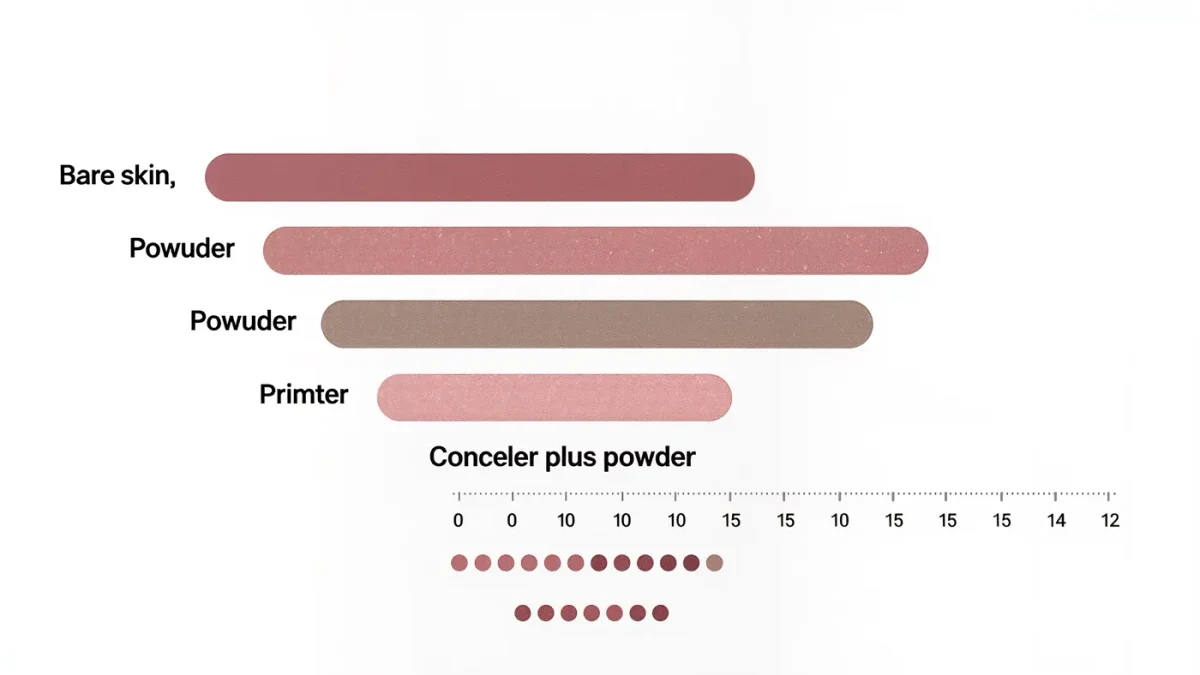
Wear time is where the gap is widest, and artists' rule-of-thumb numbers make the case better than any marketing:
| Base | Oily lids | Dry or normal lids |
|---|---|---|
| Bare skin | 1–3 hours, creasing likely | 4–6 hours, mild fading |
| Powder only | 3–5 hours | 6–8 hours |
| Concealer + powder | 4–6 hours, crease risk | 6–8 hours |
| Dedicated primer | 8–12 hours, minimal creasing | 8–12 hours |
These ranges reflect the wear claims and demonstrations artists repeat across tutorials rather than a single lab standard — cosmetic brands' own wear tests are not published in comparable formats. Treat them as expectations to test against your own lids, which vary with weather, hormones, and season.
How much primer should you apply?
Less than feels natural: a rice-grain amount per lid, pressed — not swiped — from lash line to just past the crease. The most common application error artists call out is over-application: a thick film never dries down, stays tacky, and then grabs shadow unevenly, producing patchy blending rather than longer wear. Wait roughly thirty seconds to a minute for the primer to set before applying shadow. If you feel the primer is too tacky when you start, a whisper of translucent powder over it restores control without losing grip.
Which primer type fits which situation?
- Silicone grip cream — the default for oily lids and creasing; also smooths fine texture under shimmer.
- Tinted primer — a two-in-one for people who want shadow to read true color without a separate base coat; check that the tint does not dull pale shimmers.
- Waterproof / long-wear liquids — the choice for humid climates, weddings, and tearful occasions; removal usually needs an oil-based cleanser.
- Glitter glue — a stronger tack reserved for pressed and loose glitters; too aggressive for everyday powder shadow, per makeup artists' usage guidance.
- None (powder prep) — a legitimate choice for dry lids and soft, matte, everyday looks.
Is eyelid primer bad for your skin?
For most people, no — silicones are inert, film-forming ingredients with a long safety record in cosmetics, and regulatory reviews have not flagged them for irritation at cosmetic-use levels. The realistic complaints are mechanical: incomplete removal can clog the fine pores of the eyelid and contribute to milia in people prone to them, which is why artists recommend removing eye makeup each night with a dedicated cleanser rather than sleeping in it. If you wear contact lenses or have eczema on the lids, patch-test any new primer on the inner arm first, and keep products below the crease during flare-ups.
So what is the verdict — need or skip?
A simple decision sequence covers it. If your shadow has ever creased, cut creased, or migrated by lunch: buy a dedicated silicone primer; no substitute solves oil. If your lids are dry and your shadow lasts your working day over powder: skip the purchase — your lids do not need it, and a matte powder base is free. If you mostly wear shimmer, glitter, or deep pigments and hate fallout: a primer earns its slot for grip alone. The product is a tool keyed to lid type, not a mandatory step — the same conclusion working artists reach when they show their no-primer routines for dry-eyed clients.