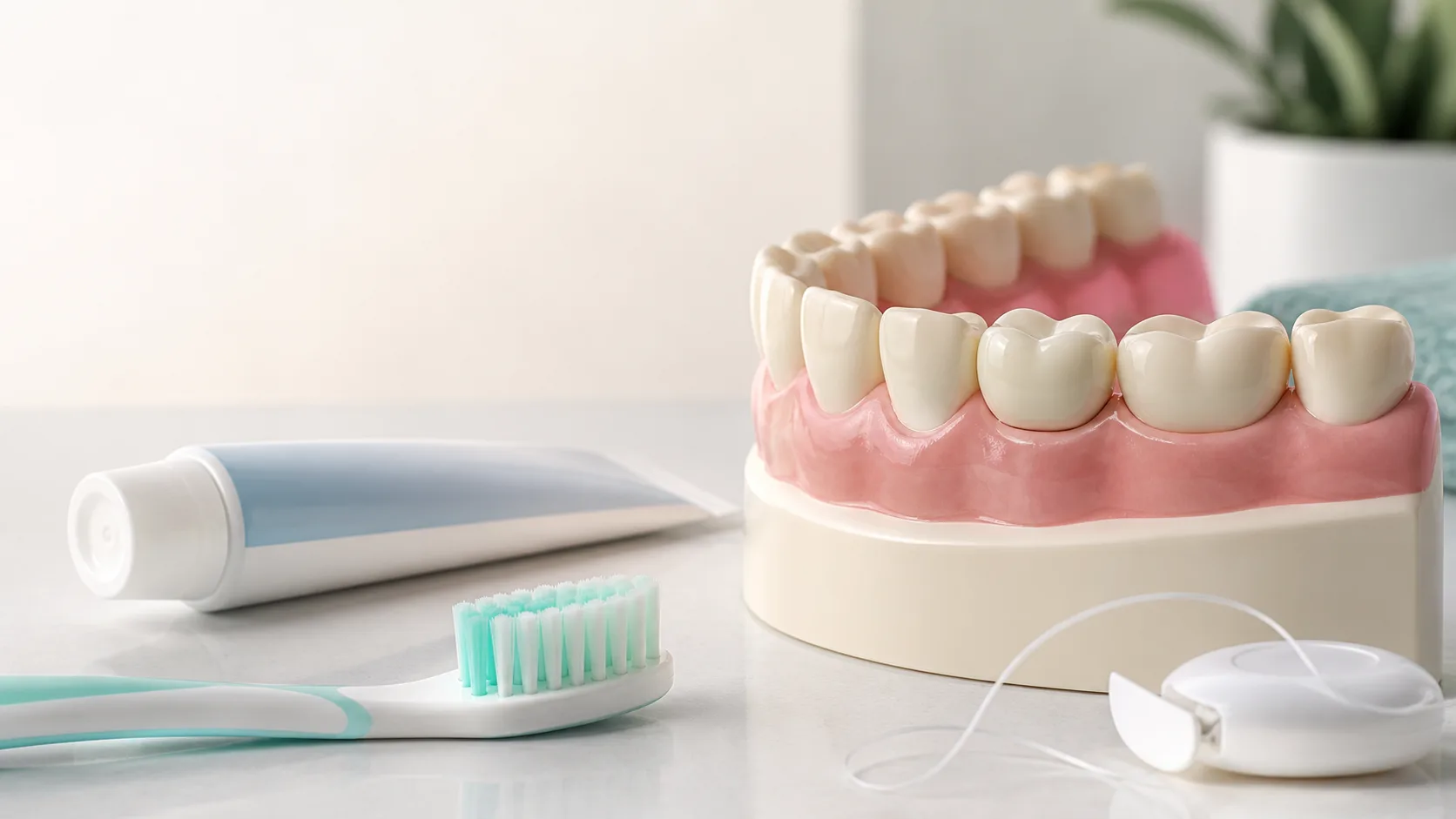
A permanent dental crown covers much of the visible part of a prepared tooth, but it does not make the supporting tooth maintenance-free. The edge where the restoration meets the tooth and gum still collects plaque, and the tooth can still develop decay. Good dental crown care therefore focuses on the whole area: the crown surface, the margin, the neighboring teeth, and the gums.
The safest routine is straightforward: brush gently twice a day with fluoride toothpaste, clean between teeth daily, avoid using crowned teeth as tools, and attend examinations at the interval your dentist recommends. This guide offers general information, not individual dental advice. A dentist must assess pain, swelling, a changed bite, or a loose restoration.
What a crown protects—and what it does not
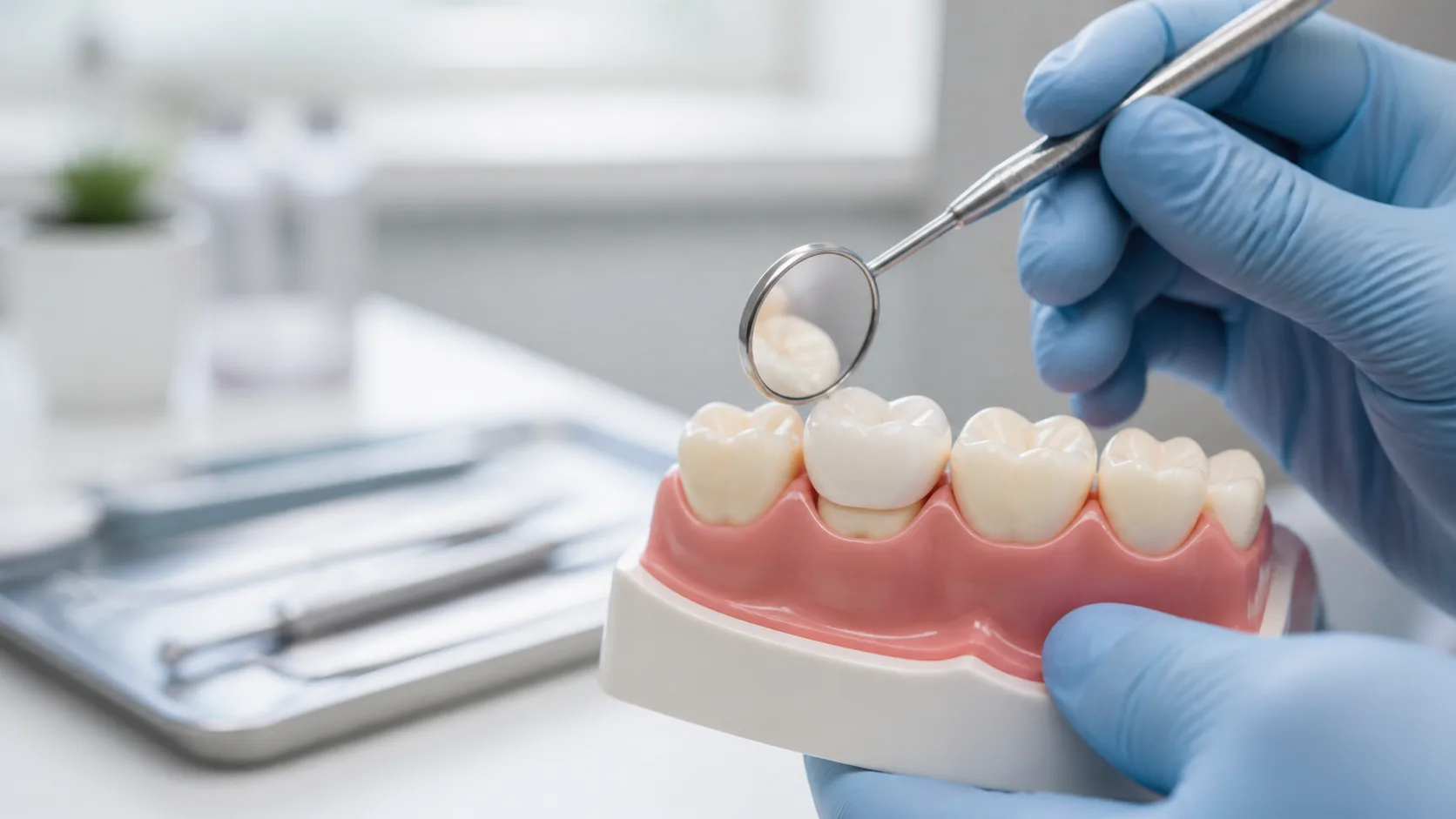
The American Dental Association’s patient guidance explains that a crown can restore the shape and size of a tooth, strengthen a tooth with a large filling, protect a weak tooth, restore a broken tooth, support a bridge, or cover an implant. The exact purpose depends on the tooth and treatment plan. A conventional crown is different from a veneer, which primarily covers the front surface for selected cosmetic and restorative needs.
The crown itself may be ceramic, zirconia, a metal alloy, porcelain fused to metal, or another approved restorative material. Home care is broadly similar across permanent crown materials. The vulnerable part is often not the manufactured crown surface but the biological tissue around it. Plaque at the margin can inflame the gum, and decay can begin in exposed natural tooth structure. Gum recession, wear, a bite problem, or breakdown of the cement can also change how a crown feels.
A crown has no guaranteed expiration date. Its performance varies with the condition of the supporting tooth, material, fit, bite forces, grinding, decay risk, oral hygiene, and accidents. That is why a calendar estimate cannot tell an individual patient when a crown will need repair or replacement.
A daily dental crown care routine
Brush for two minutes twice a day with a soft-bristled brush and fluoride toothpaste. Use light pressure and short strokes, including along the gumline. The ADA’s brushing guidance recommends fluoride toothpaste and gentle cleaning of the outer, inner, and chewing surfaces. Hard scrubbing is not a better clean; it can irritate gum tissue and contribute to abrasion of exposed natural tooth surfaces.
Clean between teeth once a day. String floss, a correctly sized interdental brush, a dental pick, a floss threader, or a water flosser may be appropriate depending on the space and the dental work. The ADA’s interdental-cleaning advice stresses gentle technique and notes that different tools work for different people. Do not force an interdental brush into a tight space. If floss repeatedly catches, shreds, or cannot pass a crown normally, ask a dental professional to inspect the contact and margin.
Mouthrinse is optional and does not replace brushing or interdental cleaning. A dentist may recommend a fluoride rinse for decay risk or an antimicrobial rinse for a specific gum-health need. There is no sound basis for a general claim that an alcohol-containing rinse loosens crown cement. Product choice should follow the person’s oral-health needs, dry-mouth risk, age, and the dentist’s instructions.
Professional cleaning and recall intervals are individualized. Someone with active gum disease, frequent decay, or complex restorations may need a different schedule from someone at lower risk. Dental crown care works best when home cleaning and professional monitoring are matched to the person rather than an arbitrary twice-yearly rule.
Protect the crown from avoidable stress and color surprises
Do not use teeth to open packages, cut thread, hold pins, or bite fingernails. Avoid chewing ice and non-food objects. Hard foods do not automatically damage every crown, but concentrated force can chip a restoration or the tooth beneath it. If you play a contact sport, ask about a sports mouthguard. If you clench or grind, a dentist can decide whether a professionally fitted night guard is appropriate and whether the bite needs adjustment.
Frequent acidic foods and drinks can contribute to erosion of exposed natural tooth surfaces. Rinse with water after an acidic exposure and avoid brushing immediately. Ordinary recreational swimming has not been shown to shorten crown-cement life, so claims that pool water routinely loosens crowns should be avoided. People with heavy exposure to poorly controlled pool water who notice sensitivity or surface changes should mention that history to a dentist.
Whitening products do not change a crown’s underlying shade. If whitening is planned, discuss the sequence before a tooth-colored crown is shade-matched. A dentist and laboratory select a shade that fits the treatment plan and nearby teeth; there is no single universal shade guide or routine reason to make a crown deliberately brighter. If an older crown appears darker or develops a line near the gum, the cause may be surface deposit, gum recession, the crown material, or a problem at the margin. Abrasive home remedies can damage surfaces and should not substitute for an examination.
Warning signs that deserve a dental assessment
Contact a dentist if the crown moves, chips, develops a sharp edge, or suddenly feels high when you bite. Persistent sensitivity, pain, gum swelling, bleeding, a bad taste or odor, and floss that newly catches can also signal a problem. These signs do not prove that the crown must be replaced. The remedy might be cleaning, bite adjustment, repair, replacement, or treatment of the supporting tooth, depending on the examination and imaging.
Do not glue a loose crown back with household adhesive. Keep the area clean, avoid chewing on that side, retain any detached restoration, and obtain professional advice. Severe or worsening pain, facial swelling, fever, or drainage can indicate infection and warrants prompt dental care. Difficulty breathing or swallowing with mouth or facial swelling requires emergency evaluation.
Our analysis of the practical risks points to one useful rule: changes matter more than a promised lifespan. A crown that looks and feels stable still needs routine care, while a new symptom deserves attention even if the restoration is relatively recent.
The bottom line
Effective dental crown care is not a special polishing trick. It is consistent plaque control, sensible protection from concentrated force, and timely professional assessment. Brush with fluoride toothpaste, clean between teeth daily, avoid abrasive whitening experiments and hard-object habits, and follow an individualized recall plan.
A well-cared-for crown may function for many years, but no home routine can guarantee that it will remain secure. The goal is to protect the natural tooth and gums, notice changes early, and let a dentist determine whether a restoration needs monitoring, adjustment, repair, or replacement.